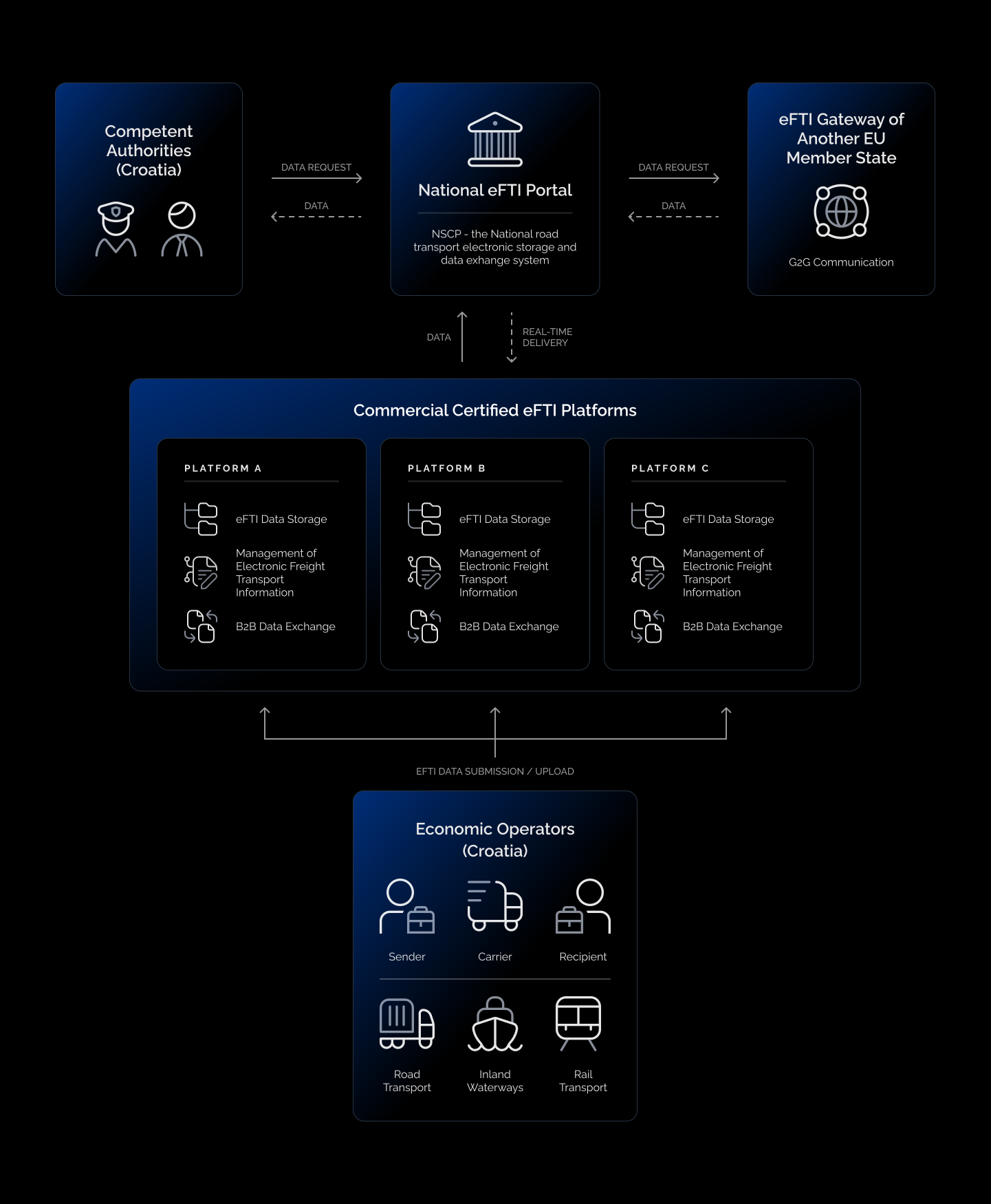
Technological Foundations
The eFTI architecture is based on a decentralised model in which eFTI platforms (private sector/IT service providers) and eFTI portals (public sector) play complementary roles. As required by the EU regulatory framework, this project establishes a national eFTI portal that will:
Provide broad multimodal coverage – although its primary focus is road transport, the technological model has been designed as a scalable solution to enable interoperability across all relevant transport modes, including road, rail and inland waterway transport.
Implement EU-standardised data exchange – the system applies semantic standards developed by the European Commission's expert groups, including the Digital Transport and Logistics Forum (DTLF), transforming transport data into structured, secure and interoperable electronic records.
The eFTI Ecosystem
Europe has taken a major step towards the digital transformation of logistics through the adoption of Regulation (EU) 2020/1056 on electronic freight transport information (eFTI). The Regulation establishes the foundation for a European data ecosystem, where electronic freight transport information (eFTI) consists of electronically processed data elements used for the exchange of regulatory information between economic operators and competent authorities.
Economic operators are not obliged to provide regulatory information electronically to competent authorities. However, when they choose to do so, they must:
use data processed through a certified eFTI platform;
make the data available in a machine-readable format via an authenticated and secure connection to the data source on the eFTI platform and, where data inspection is requested, provide the competent authorities with a notification containing a unique electronic identification link to the relevant data;
present the information in a human-readable format, upon request by the competent authorities, using the economic operator's device during an on-site inspection.
Competent authorities are required to:
accept regulatory information made available electronically by economic operators;
accept electronic regulatory information relating to waste shipments covered by Regulation (EC) No 1013/2006;
be able to access and process electronically the eFTI data made available by economic operators;
provide official endorsements, such as stamps or certificates, in electronic form whenever such endorsements are required as part of the regulatory information.
Competent authorities, eFTI service providers and economic operators must ensure the confidentiality of commercial information and guarantee that such information can be accessed and processed only by authorised parties.
eFTI introduces the exchange of structured digital records that flow through the entire logistics chain in real time, connecting the private and public sectors at the point of their interaction. The system is not limited to regulatory oversight; it fundamentally transforms and accelerates communication at two key levels:
B2B (Business-to-Business) – the exchange of information between economic operators.
B2A (Business-to-Authority) – the exchange of information between economic operators and competent authorities.
The digital architecture can be viewed through three fundamental pillars:
Future eFTI Platforms
The fundamental building block of the eFTI system is platforms. These are not simple text-entry portals, but future complex IT solutions in which data about the basic unit — the shipment — will be generated, processed and stored. They will be developed by the commercial IT sector.
Platform certification
Since a large number of different commercial platforms will exist in the European market, it is necessary to ensure that each meets the highest standards. The eFTI regulation therefore introduces mandatory certification — a software solution validation process that guarantees semantic interoperability, data integrity and cybersecurity.
eFTI portals
While the operational life of a shipment (B2B) takes place within certified platforms, the state has an obligation to build infrastructure that enables smooth and secure access to that data when legally required (B2A). This infrastructure is called eFTI portals, and it is the main subject of the NSCP project in the Republic of Croatia.
eFTI will enable companies to optimise their internal and mutual B2B processes through certified platforms, while Croatia through eFTI NSCP provides infrastructure that recognises and accepts the same data in digital form, without disrupting or slowing down logistics flows.
More information about the benefits envisaged by the European Commission can be found on the European Commission website.
Future eFTI Platforms
The fundamental building blocks of the eFTI ecosystem are eFTI platforms. These are not simple data entry portals, but advanced IT solutions where information relating to the basic transport unit—the consignment—will be generated, processed and stored. These platforms will be developed by the commercial IT sector.
eFTI platforms used for processing regulatory information must provide functionalities that ensure:
compliance with data protection legislation when processing personal data;
the confidentiality of commercially sensitive information;
that competent authorities can access and process data in accordance with the applicable technical specifications;
that economic operators can make regulatory information available to competent authorities;
the establishment of a unique electronic identifier linking a consignment to its associated data elements;
that data is processed exclusively through authorised and authenticated access;
that all data processing activities are recorded in activity logs;
that data can be securely archived and remain accessible when needed;
that data is protected against damage, loss and theft.
eFTI Portals
The eFTI Portal is the core component of the NSCP project in the Republic of Croatia. It:
provides the technical interface for competent authorities;
enables secure cross-border communication between EU Member States;
identifies the relevant eFTI platform(s) based on requests received from competent authorities and routes those requests to the appropriate destination;
provides technical integration capabilities to support certified eFTI platforms;
forwards information requests and responses between competent authorities, eFTI platforms and other national eFTI portals;
ensures that all transactions are logged and remain traceable for monitoring, audit and compliance purposes;
ensures compliance with the technical specifications and data standards laid under the EU eFTI regulatory framework.
Potential Benefits for the Logistics Chain
The integration of eFTI standards can bring benefits not only to the entire logistics chain but to society as a whole.
Optimisation
The transition from paper documents to structured digital data can reduce operational costs. Real-time information flow eliminates manual entry, reduces human errors, accelerates administrative processes and optimises transport capacity utilisation.
Transparency and Collaboration
eFTI platforms are designed to enable seamless and secure data exchange between consignors, carriers, consignees and other participants in the logistics chain. All stakeholders have access to the same verified information at any time, reducing misunderstandings and fostering trust.
The eFTI ecosystem also addresses the challenge of differing digital standards among EU Member States by ensuring that data submitted in Croatia can be recognised and processed in the same way in France, Germany or the Netherlands.
Green Logistics
The elimination of paper-based documentation reduces the environmental footprint of transport operations, while structured digital data enables more accurate calculation and reporting of greenhouse gas emissions.
Future Development – When Will the System Be Fully Operational?
Implementation Timeline
The rollout of the eFTI framework follows a gradual and controlled implementation schedule defined by the European Union, taking into account market readiness and the preparedness of all stakeholders.
From 9 July 2027, competent authorities among all EU Member States will be required to accept freight transport information in electronic format, in accordance with Regulation (EU) 2020/1056 on electronic freight transport information (eFTI).